
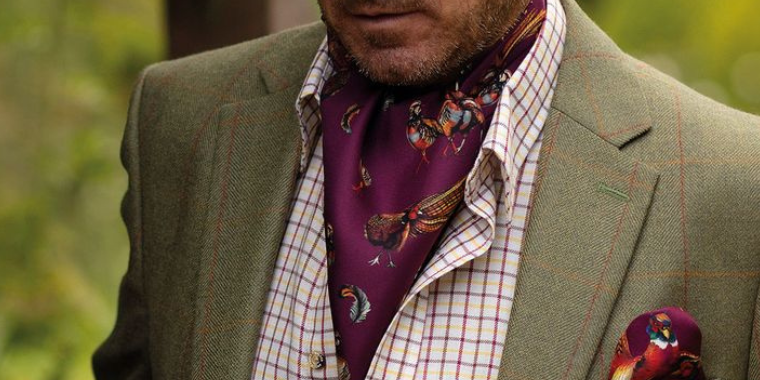
Before diving into styling, it’s worth understanding what an ascot scarf actually is. An ascot is a type of men’s neckwear that bridges the gap between a traditional necktie and a silk scarf. Unlike a standard tie, it’s wider, softer, and typically made from silk. Originally worn by British gentlemen in the 19th century at formal races like the Royal Ascot, it has since evolved into a versatile accessory that adds sophistication to casual and semi-formal looks alike.
Today, the ascot scarf—sometimes called a “men’s ascot tie” or “ascot necktie”—offers a relaxed form of elegance that feels timeless yet contemporary.

Why the Ascot Works So Well in Fall
Fall fashion is about balance—comfort, warmth, and texture. The ascot fits perfectly into this equation. Its silk or satin fabric adds a subtle sheen that contrasts beautifully with the heavier materials of autumn, such as wool blazers, tweed jackets, and corduroy vests.
An ascot scarf also provides just enough coverage around the neck to keep you warm without looking bulky. Unlike a thick winter scarf, it maintains a sense of refinement. This makes it a smart layering piece for transitional weather, especially when temperatures hover between mild and cool.
How to Tie an Ascot Scarf
Tying an ascot might seem intimidating, but it’s surprisingly simple once you get the hang of it. Here’s how to tie an ascot:
Drape the ascot evenly around your neck, with both ends hanging in front.
Cross one end over the other and pull it up through the loop, similar to the first step of tying a necktie.
Spread the upper layer to cover the knot, creating a loose fold that rests flat against your chest.
You can tuck it inside your shirt for a polished, traditional look, or leave it outside your shirt for a more relaxed style. Both options work—what matters is matching the vibe to the occasion.
Casual Ways to Wear an Ascot
The beauty of modern ascots is their versatility. You can easily wear an ascot casually without feeling overdressed. Try pairing a silk ascot with an open-collar shirt and a brown or olive vest for a soft vintage touch. Earth tones like orange, red, or olive ascots complement the natural palette of fall—think rust leaves and golden sunlight.
Another idea is to wear your ascot like a scarf, letting it peek from beneath a sweater or light jacket. This “ascot scarf” style works especially well with neutral knitwear or a denim shirt. It adds personality to an otherwise simple outfit, giving it a European-inspired twist.
When to Wear an Ascot Tie Formally
While ascots are often associated with casual elegance, they also hold a place in formal settings—particularly daytime weddings, horse races, or vintage-themed events. For more formal occasions, opt for silk ascots for men in subtle patterns or muted shades. The royal ascot dress code traditionally calls for a waistcoat and morning coat, but modern interpretations allow flexibility.
If you’re attending a sophisticated fall event—perhaps a garden party or an outdoor ceremony—an ascot can replace a necktie entirely, lending refinement without rigidity.
Finding Your Own Ascot Style
The ascot isn’t about following strict rules—it’s about embracing a look that feels confident and personal. Some men prefer the simplicity of neutral colors, while others enjoy making a statement with bold tones like red ascots or patterned designs. The key is to coordinate with your outfit’s texture and mood.
For those exploring refined fall accessories or experimenting with unique neckwear options, the ascot remains one of the most expressive choices. Its history, texture, and understated charm make it an essential piece for men who appreciate the details of classic style.
To discover a selection of men’s ascot ties, silk ascots, and coordinated sets that align with modern styling sensibilities, you can explore collections at Barry. Wang, where craftsmanship meets contemporary design.